
Comme les blocs erratiques poussés par les glaciers, ce blog se laisse porter par le courant de la vie: en abordant l'actualité, l'humour, le cinéma, la BD, la photo, la littérature, la musique,...etc...sans ce prendre le choux.

«Un rapport ravageur, le genre de révélation qui devrait bouleverser toute conscience», écrit le New York Times. Tout porte en effet à croire aujourd'hui que Todd Willingham, exécuté en 2004 au Texas pour avoir incendié sa maison et ainsi tué ses trois filles, était en réalité innocent. Un spécialiste américain reconnu des scènes d'incendie a transmis en août à la commission d'éthique texane un rapport détaillé dans lequel il conclut que le feu était d'origine accidentelle. La commission devra rendre prochainement ses conclusions. L'histoire de Todd Willingham pourrait constituer une première : jamais aucun Etat américain n'a officiellement reconnu avoir commis une erreur en matière d'exécution.
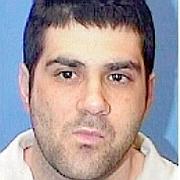
C'est en 1992 que Todd Willingham, alors âgé de 24 ans, est condamné à mort pour l'incendie meurtrier de sa maison, survenu un an plus tôt. Le jury se range à l'époque à l'avis d'un rapport d'experts locaux, qui assure que l'homme a lui-même mis le feu à son domicile. Pendant douze ans, depuis sa cellule, Todd Willingham n'a de cesse de crier son innocence. Soutenu par plusieurs associations, son affaire ne sera pourtant jamais réétudiée par la justice américaine. En 2004, il est exécuté par injection létale.
Le rapport transmis en août dernier à la commission texane par un spécialiste des incendies vient donc jeter un pavé dans la mare. D'autant que ces conclusions rejoignent celles de deux autres spécialistes, qui avaient déjà enquêté en 2004 et 2006. Tous sont unanimes : l'expertise de l'époque «ne repose sur rien d'autre qu'une accumulation de croyances personnelles, qui n'ont rien à voir avec une investigation scientifique des scènes d'incendie».
Un avis partagé par le New Yorker, qui, dans son édition de cette semaine, explique que cette affaire contient tous les ingrédients classiques de l'erreur judiciaire : absence de contre-expertise, expert-psychiatre décrivant un «sociopathe très dangereux» sans l'avoir jamais rencontré, témoins modifiant leur témoignage en faveur de l'accusation, avocats commis d'office incompétents... Les conclusions du journal sont accablantes pour la justice américaine.
Les abolitionnistes sont aussitôt montés au créneau. Si l'innocence du défunt est officiellement établie par la commission, le cas de Todd Willingham illustrerait «le plus grand dilemme de notre pays sur la peine de mort», estime Rick Halperin, président d'une association texane contre la peine de mort. «Sommes-nous prêts ou pas à garder ce système en sachant que des innocents vont être déclarés coupables et exécutés ?»
Une question qui a une résonance toute particulière au moment où Troy Davis, un Noir condamné pour le meurtre d'un policier blanc, crie son innocence dans le couloir de la mort en Géorgie. Après avoir échappé à trois exécutions prévues, il a obtenu en août de la Cour suprême qu'un tribunal examine de nouveaux éléments le disculpant.
Mais, aussi accablant que soit le cas de Todd Willingham pour les partisans de la peine de mort, les choses pourraient ne pas être si aisées pour les abolitionnistes : dans une récente décision, deux juges de la Cour suprême ont affirmé que l'exécution d'un homme ayant prouvé son innocence restait «valable» dans la mesure où il a bénéficié d'»un procès juste et équitable».

There is a long and remarkable article in the current New Yorker about a man who was executed in Texas in 2004 for deliberately setting a fire that killed his three small children. Rigorous scientific analysis has since shown that there was no evidence that the fire in a one-story, wood frame house in Corsicana was the result of arson, as the authorities had alleged.

Bob Herbert
In other words, it was an accident. No crime had occurred.
Cameron Todd Willingham, who refused to accept a guilty plea that would have spared his life, and who insisted until his last painful breath that he was innocent, had in fact been telling the truth all along.
It was inevitable that some case in which a clearly innocent person had been put to death would come to light. It was far from inevitable that this case would be the one. “I was extremely skeptical in the beginning,” said the New Yorker reporter, David Grann, who began investigating the case last December.
The fire broke out on the morning of Dec. 23, 1991. Willingham was awakened by the cries of his 2-year-old daughter, Amber. Also in the house were his year-old twin girls, Karmon and Kameron. The family was poor, and Willingham’s wife, Stacy, had gone out to pick up a Christmas present for the children from the Salvation Army.
Willingham said he tried to rescue the kids but was driven back by smoke and flames. At one point his hair caught fire. As the heat intensified, the windows of the children’s room exploded and flames leapt out. Willingham, who was 23 at the time, had to be restrained and eventually handcuffed as he tried again to get into the room.
There was no reason to believe at first that the fire was anything other than a horrible accident. But fire investigators, moving slowly through the ruined house, began seeing things (not unlike someone viewing a Rorschach pattern) that they interpreted as evidence of arson.
They noticed deep charring at the base of some of the walls and patterns of soot that made them suspicious. They noticed what they felt were ominous fracture patterns in pieces of broken window glass. They had no motive, but they were convinced the fire had been set. And if it had been set, who else but Willingham would have set it?
With no real motive in sight, the local district attorney, Pat Batchelor, was quoted as saying, “The children were interfering with his beer drinking and dart throwing.”
Willingham was arrested and charged with capital murder.
When official suspicion fell on Willingham, eyewitness testimony began to change. Whereas initially he was described by neighbors as screaming and hysterical — “My babies are burning up!” — and desperate to have the children saved, he now was described as behaving oddly, and not having made enough of an effort to get to the girls.
And you could almost have guaranteed that a jailhouse snitch would emerge. They almost always do. This time his name was Johnny Webb, a jumpy individual with a lengthy arrest record who would later admit to being “mentally impaired” and on medication, and who had started taking illegal drugs at the age of 9.
The jury took barely an hour to return a guilty verdict, and Willingham was sentenced to death.
He remained on death row for 12 years, but it was only in the weeks leading up to his execution that convincing scientific evidence of his innocence began to emerge. A renowned scientist and arson investigator, Gerald Hurst, educated at Cambridge and widely recognized as a brilliant chemist, reviewed the evidence in the Willingham case and began systematically knocking down every indication of arson.
The authorities were unmoved. Willingham was executed by lethal injection on Feb. 17, 2004.
Now comes a report on the case from another noted scientist, Craig Beyler, who was hired by a special commission, established by the state of Texas to investigate errors and misconduct in the handling of forensic evidence.
The report is devastating, the kind of disclosure that should send a tremor through one’s conscience. There was absolutely no scientific basis for determining that the fire was arson, said Beyler. No basis at all. He added that the state fire marshal who investigated the case and testified against Willingham “seems to be wholly without any realistic understanding of fires.” He said the marshal’s approach seemed to lack “rational reasoning” and he likened it to the practices “of mystics or psychics.”
Grann told me on Monday that when he recently informed the jailhouse snitch, Johnny Webb, that new scientific evidence would show that the fire wasn’t arson and that an innocent man had been killed, Webb seemed taken aback. “Nothing can save me now,” he said.
/http%3A%2F%2Fwhos.amung.us%2Fwidget%2Fhv8xjxxcvaii.png "Click to see how many people are online")


/http%3A%2F%2Fupload.wikimedia.org%2Fwikipedia%2Fcommons%2Fd%2Fd9%2FGaliga%C3%AF_1617.jpg)
/http%3A%2F%2Fthinesclaude.wifeo.com%2Fimages%2Fvacher3.jpg)
/http%3A%2F%2Fpagesperso-orange.fr%2Fremi.cuisinier%2Fmaison.jpg)
/http%3A%2F%2Fboisdejustice.com%2FHistory%2FGuillotin.JPG)